
Where all this comes from
Six separate cultures built sweat bathing independently, and mostly agreed with each other.
Every few years a very old practice gets rebranded as a discovery. Contrast bathing is having that moment now — protocols, wearables, podcast segments, a lot of confident men with timers.
It's worth knowing that heat-then-cold has been standard human behavior on nearly every continent for a very long time, and that the cultures who built it out arrived at strikingly similar rules without talking to each other. When five or six traditions separated by thousands of miles land on the same etiquette, that etiquette is probably load-bearing.
Finland — löyly
Roughly 3.3 million saunas for 5.5 million people. It's not a wellness category there; it's plumbing.
Löyly is the burst of steam that comes off the rocks when you ladle water on them. It's also the word for the spirit of the room — which tells you something about how the two are related. Traditionally there are no titles in a sauna. No rank, no business, no arguing. You sit, you sweat, you go outside and get in the lake.
The sauna was historically the cleanest room on the property. Babies were born there. The sick were tended there. The dead were washed there for burial. It was warm, sterile, and sacred in an entirely plain, unfussy way — which is exactly why you washed before you went in. You did not carry the outside world into that room.
That's the part we imported most directly, and it's why we hand you soap at the door.
Japan — sento and onsen
Japan takes the washing rule furthest. You sit on a low stool at a hand shower and clean yourself completely — soap, scrub, full rinse — in the open, before going anywhere near the communal bath.
The distinction is built into the architecture: the bath is for soaking, not for cleaning. You arrive at the water already clean, and you do it in public without embarrassment.
Modern Japanese sauna culture also gave us the single best word in this whole field. After heat, then cold, then rest, there's a state people describe as totonou — roughly, "tuned," or "arranged properly." It's the thing you feel sitting in the courtyard after round three, when you've stopped shaking and the warmth is moving back outward and you have no interest whatsoever in your phone. English doesn't have a word for it. Japanese does.
Five cultures, thousands of miles apart, all decided you wash before you get in. That's not etiquette. That's a finding.
Russia — banya
Wetter and hotter than a Finnish sauna, and more physical. The venik is a bundle of birch or oak branches, soaked and then used to whisk and slap the skin — driving heat into the body and circulation up. It sounds violent and feels wonderful.
Then cold water, immediately. Then food, and a long sit, and more conversation than you planned on. The banya is a social institution rather than a facility, which is the distinction we care most about.
Turkey — hammam
Descended from Roman bath architecture and running the same three-room logic the Romans used: warm room, hot room, cold room. Warm marble, steam, a vigorous scrub with a kese mitt, cold water at the end.
Also, notably, a place people went specifically to talk. The bath as public square is a recurring theme — it shows up in Rome, in Istanbul, in Moscow, and in a courtyard off South Lamar on a Tuesday night.
The Nordics — winter swimming
Avantouinti: cut a hole in the frozen lake, get in, get out, go back to the sauna. Practiced weekly by a large slice of Finland and Sweden through the darkest months of the year.
Worth emphasizing because of what it corrects: the tradition is the contrast, not the cold on its own. Nobody in Finland is sitting in an ice hole for its own sake with no sauna nearby. The swing is the practice.
Mesoamerica — temazcal
A low domed sweat house heated with volcanic stones, used for healing and ceremony for centuries across Mexico and Central America. We name it because sweat traditions are not a Northern European invention, and the version of this history that only mentions Finland is telling you about marketing rather than about people.
The line we don't cross
Indigenous sweat lodge ceremonies across North America are living religious practice. They are not a wellness format, they are not a template, and they are not something a business should be borrowing language from.
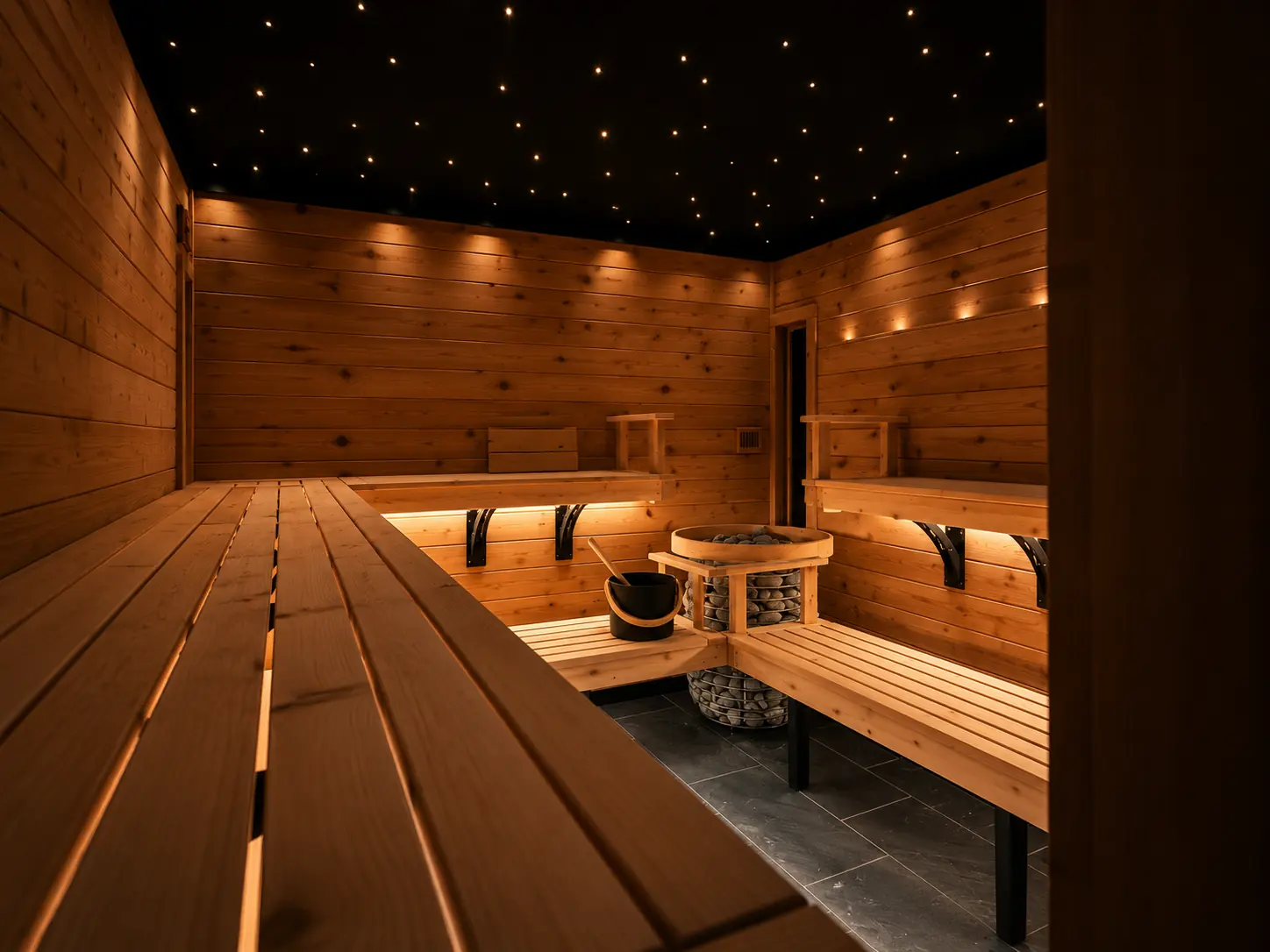
We're a cedar room at 185° with a cold tub next to it. We take from bathing culture — the hygiene, the contrast, the room where nobody has a title — and we leave ceremony alone. We think stating that plainly is better than gesturing vaguely at "ancient wisdom" in a brochure.
What actually carried over
- Wash first. Every tradition. No exceptions.
- Contrast, not just cold. Heat and cold together, with rest between.
- The room is shared. Silence when it's silent, talk when it's talking.
- Nobody's rank comes in with them. The Finnish rule, and the best one.
- Eat afterward. The Russians were right about this and we're lucky enough to have a dining room thirty steps away.